
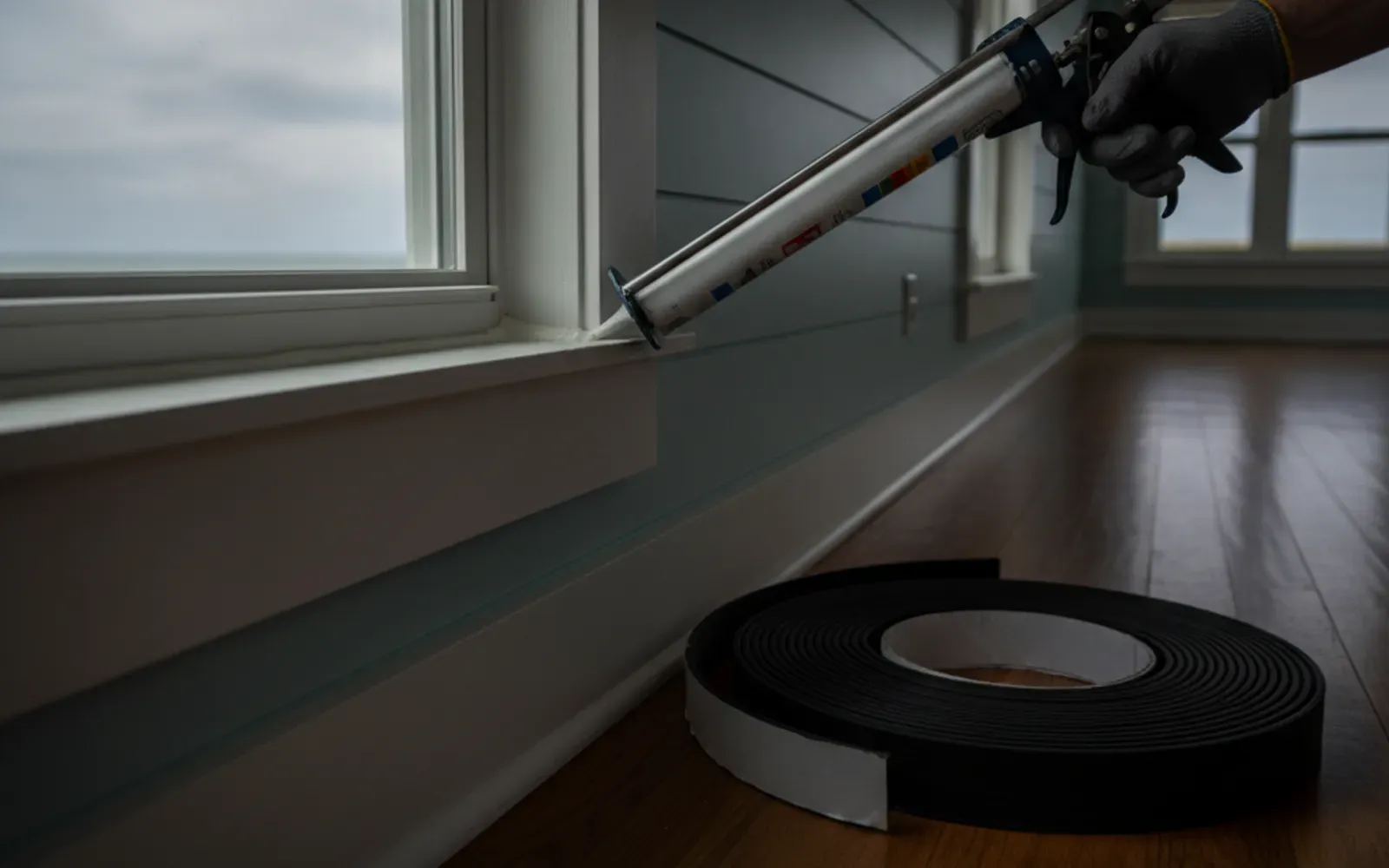
Caulking and weatherproofing services in Wilmington, NC are not a glamorous line item — but they are among the most consequential maintenance tasks a coastal homeowner can invest in. Every gap, crack, or failed sealant joint around a tub, shower pan, window frame, or exterior door is an open invitation for moisture, salt air, and energy loss to enter your home. Yurii Statkevych has been sealing, weatherstripping, and weatherproofing Wilmington homes for 15 years, and his approach is straightforward: full removal first, proper surface preparation, and the right sealant for the specific application — because caulking done right does not need to be redone every season.
The full scope of caulking and weatherproofing
Caulking and sealing work covers more locations and materials than the bathroom tub most people think of first.
Bathroom re-caulking is the most common call. Tub surrounds, shower pans, the joint where the shower base meets the wall, the perimeter of a pedestal sink, and the transition from tile to non-tile surfaces all rely on a continuous, flexible sealant joint to keep water in the fixture and out of the wall. When that joint cracks, peels, or grows mold, water begins working its way behind the tile or into the subfloor — sometimes for months before visible damage appears.
Shower pan and tile sealing goes beyond the perimeter bead. Grout between floor tiles is porous and should be sealed periodically. The caulk joint at the wall-floor transition in a shower needs to be flexible silicone rather than grout, which cracks under the movement all shower pans experience over time.
Window caulking — interior and exterior — addresses the joint between the window frame and the surrounding wall finish. On the exterior, this joint is exposed to UV, rain, and in Wilmington, salt air and hurricane winds. On the interior, a failing window seal often shows up as condensation on the sill, a draft near the frame, or visible daylight at the corners. Both sides benefit from attention.
Exterior door frame caulking seals the joint between the door casing and the siding or brick — one of the most common entry points for wind-driven rain. This joint often fails long before the door or weatherstripping does, and it is easily overlooked during routine inspections.
Weatherstripping replacement on doors and windows is the sealing system that compresses when the door closes, blocking air movement around the door perimeter. It flattens, cracks, and loses elasticity over time. Replacing it restores the seal without requiring a new door.
Door sweeps and thresholds seal the gap at the bottom of a door — often the largest single air leak in an otherwise properly sealed door frame. New door sweeps are inexpensive and dramatically reduce drafts, moisture intrusion, and pest entry.
Garage door seals — the bottom seal and the perimeter gasket — are often the largest uncontrolled air gaps in a home’s envelope, particularly on older Wilmington properties where the original weatherseal has never been replaced.
General moisture and draft sealing on older homes encompasses gaps around pipe penetrations, electrical outlets on exterior walls, attic hatches, and other points where conditioned air escapes or outdoor air enters. A comprehensive weatherproofing visit that addresses these locations in addition to obvious caulk failures can make a measurable difference in comfort and energy costs.
Why caulking fails faster on coastal properties
The Wilmington coastal environment is genuinely harder on sealants than most inland climates. Understanding why helps explain both what to look for and why professional application produces longer-lasting results.
Humidity cycling is the primary stress. Wilmington’s humidity swings dramatically between summer and winter, and even between morning and afternoon during coastal storm systems. Caulk bonds to surfaces and must flex with that dimensional change. Caulk that is applied to a damp surface, bonded on three sides instead of two, or selected without attention to moisture ratings will fail early — sometimes within a single season.
UV exposure degrades most sealants on south- and west-facing walls, and Wilmington’s sun intensity accelerates this. Exterior caulks need UV resistance built into the formulation, not just flexibility.
Salt air reacts with sealant formulations over time, particularly on properties within a half-mile of the ocean. Silicone sealants are more resistant than latex-based products in these conditions, which is one reason product selection matters on coastal applications.
Thermal expansion is amplified on dark-colored siding and at south-facing windows where surface temperatures can spike dramatically on sunny winter days even while ambient temperatures are mild.
Settlement and vibration in older homes — the kind of gradual movement that makes floors creak and picture frames drift out of level — stresses caulk joints continuously. A rigid sealant in a joint that moves will eventually crack; the right flexible product in the same joint lasts for years.
What proper caulk removal and prep actually involves
The most important step in any caulking job is the one that is hardest to see when it is done well: complete removal of the old material and thorough surface preparation. Applying new caulk over old is a shortcut that creates two layers of failing material instead of one.
Yurii removes existing caulk using a combination of utility knife, oscillating tool, and chemical softener depending on the material and location. In tile showers, old silicone has a specific removal technique that avoids scoring the tile surface. In exterior window joints, old caulk may be layered from multiple applications over decades and requires patient work to get back to clean substrate.
After removal, surfaces are cleaned of residual adhesive, soap scum, mildew residue, or deteriorated grout using appropriate cleaners and allowed to fully dry. In bathrooms where the old caulk had mold growth, the surface is treated before new material is applied — sealing over mold is not a solution, it is a delay of the same problem.
Only once the joint is clean, dry, and fully prepped does Yurii apply new sealant. The bead is sized to the joint, tooled for contact with both surfaces, and finished smoothly. The result is a continuous, well-bonded joint rather than a lumpy application that holds air gaps inside it.
Weatherstripping and draft sealing as energy improvements
In Wilmington, where summers demand continuous air conditioning and winters occasionally turn genuinely cold, air leakage through doors and windows has a direct impact on energy bills. A door whose weatherstripping has flattened to the point of no longer making contact around its full perimeter is allowing a constant exchange between conditioned and outdoor air.
Replacing weatherstripping on a standard door takes under an hour and the improvement in door-close feel is immediate. Adding or replacing a door sweep takes minutes and eliminates the most significant air gap. These are unglamorous tasks with outsized practical returns — the kind of maintenance that pays for itself in energy savings within a cooling or heating season.
DIY caulking versus professional application
Buying a tube of caulk and a caulk gun is easy. Getting a caulk job that lasts requires the right product for the specific application, proper removal of the old material, surface preparation that most homeowners skip, and an application technique that produces a uniform, well-bonded bead.
Common DIY caulking mistakes include: applying new material over old (which means the new bead is bonded to failed material rather than the substrate), using interior latex caulk in wet areas that require silicone, applying to a surface that has not fully dried after cleaning, using too large a bead that skins over on the outside before bonding on the inside, and failing to tool the bead into firm contact with both surfaces.
Yurii’s professional application produces results that last seasons rather than months. For a bathroom re-caulk or an exterior window seal that fails within a year of a homeowner’s DIY attempt, the cost of professional work on the next attempt is well justified by the durability of the result.
What affects the cost of caulking and weatherproofing in Wilmington
Number of locations — Re-caulking a single tub is a short visit; addressing a whole-house exterior caulk inspection with window, door, and penetration sealing is longer. Batching multiple caulking needs in a single visit is more economical.
Condition of existing caulk — Heavily layered, deeply failed, or mold-contaminated caulk takes more time to remove and prep than a relatively fresh application that has simply begun to crack. Old homes in Wilmington with decades of accumulated caulk layers take longer.
Material type — Silicone sealant is more expensive than latex caulk and requires more care in application and cleanup, but it is the correct product for wet areas, exterior joints, and coastal-exposure applications. Choosing the right material for the location is not negotiable.
Weatherstripping and sweep replacement — Adding weatherstripping or sweep work to a caulking visit is efficient but adds both material and labor time to the estimate.
Accessibility — Ground-floor windows and tub surrounds are straightforward. Second-story exterior window caulking or hard-to-reach exterior joints add ladder time and care.
Get a free estimate — Yurii will inspect your specific areas of concern, identify any underlying issues that need attention, and give you a clear quote before work begins.
Caulking and weatherproofing across Wilmington’s communities
The need for consistent sealing maintenance is universal in Wilmington’s coastal climate, but it plays out differently depending on the age and location of the home.
Oceanfront and near-ocean properties in Wrightsville Beach and Carolina Beach face the highest salt-air exposure of any location in the area. Exterior caulk on these properties should be inspected every fall before storm season and reapplied wherever it shows cracking or separation. The UV and salt combination degrades standard exterior caulk faster than inland conditions, and Yurii selects products specifically rated for coastal exposure on these properties.
Older homes in downtown and midtown Wilmington often have original wood windows with multiple generations of paint and caulk applied over the decades. These windows need careful attention — the original glazing compound that seals the glass to the frame may be failing in addition to the frame-to-wall joint. A comprehensive window sealing visit on an older Wilmington bungalow can address several distinct layers of the sealing system.
Beach rental properties in Kure Beach and Carolina Beach experience heavier bathroom use than primary residences, meaning tub and shower caulk in rental properties degrades faster. Pre-season re-caulking before peak rental months is a routine investment for owners who want to avoid mid-season moisture complaints from guests.
Newer construction in Leland, Hampstead, and Porters Neck often has builder-grade caulk applications that were correct at the time but may be due for their first professional inspection and reapplication after five to ten years of coastal climate exposure.
Post-storm caulk inspection is worth scheduling after any significant tropical event. Hurricane-force wind and rain finds every gap in the building envelope, and the entry points for storm water often become the ongoing entry points for every subsequent rain until they are properly sealed.
Related services
Caulking and weatherproofing naturally connects to adjacent work. When a failed tub caulk has allowed moisture into the wall for long enough, drywall repair is part of the resolution — fixing the damage behind the failed seal before resealing. Exterior caulk failures on siding are often discovered during or after pressure washing, when the clean surface reveals cracks that were hidden under dirt. Door weatherstripping replacement connects directly to door and lock installation work when the door itself needs adjustment alongside the seal replacement. Homes being prepared for sale often combine caulking and weatherproofing with interior and exterior painting so fresh paint and clean sealant go on together. A full exterior sealing review can be part of broader general home repairs when a property needs a systematic maintenance pass.
Yurii serves the full Wilmington metro area, including Wilmington, Wrightsville Beach, Carolina Beach, and Castle Hayne.
Frequently asked questions about caulking and weatherproofing
How much does professional re-caulking cost in Wilmington, NC?
The cost depends on the number of locations, the amount of old material to remove, and whether weatherstripping or sweep replacement is included. A single bathroom tub re-caulk is a short visit at the lower end of the range; a comprehensive whole-house exterior sealing inspection and application is a larger project. Yurii provides a free estimate after seeing the specific areas, so you know the cost before work begins.
How long does re-caulking a shower or tub take?
Removing the old caulk, cleaning and drying the surface, and applying new material to a standard tub surround typically takes two to three hours — the cure time before the tub can be used adds another 24 hours for silicone products. Yurii schedules bathroom re-caulking at the beginning of a visit when possible so cure time runs while other work is completed elsewhere in the home.
What is the difference between silicone and latex caulk, and which one does my project need?
Latex (acrylic) caulk is paintable, easier to apply, and cleans up with water — appropriate for interior trim joints, crown molding gaps, and baseboards. Silicone caulk is non-paintable but flexible, waterproof, and durable in wet environments — the correct choice for tub surrounds, shower pans, and most exterior applications. Using latex caulk in a wet location is one of the most common reasons bathroom caulk fails within a year of application. Yurii selects the correct product for each location automatically — it is not optional.
Can caulking actually help lower my energy bills?
Yes, meaningfully so. Air leakage through gaps around windows, doors, and penetrations accounts for a significant portion of conditioned air loss in most Wilmington homes. Properly sealed windows and doors — new weatherstripping, a replaced door sweep, and caulked frame-to-wall joints — reduce the load on your HVAC system. The effect is most noticeable in older homes where the original sealing was installed decades ago and has never been systematically updated.
How do I know if my window caulk is failing?
The clearest signs are visible cracking, separation from the frame or wall surface, chalky or powdery texture, or daylight visible at the corners of the window from inside. A subtle test is to run a hand along the frame perimeter on a windy day — any air movement indicates a gap. On the exterior, look for caulk that has pulled away from one surface while still adhering to the other, leaving an open channel. Any of these conditions warrants re-caulking before the next heavy rain season.
Should I caulk or weatherstrip first?
For a door that is getting both new weatherstripping and a recaulked frame, the correct sequence is caulking the exterior frame first, allowing it to cure, and then installing the weatherstripping so it is not disturbed during caulk application. For window work, both can happen in the same visit with appropriate sequencing. Yurii manages this order naturally on combined visits.
Can you schedule recurring seasonal caulk inspections for a vacation rental?
Yes. Yurii works with property managers and vacation rental owners in the Wilmington area on scheduled maintenance visits. A pre-season caulk inspection — typically late spring before peak rental months — that addresses any failed seals in bathrooms and kitchens is a practical investment for rental properties. Contact Yurii to discuss a maintenance schedule that works for your property’s turnover calendar.