
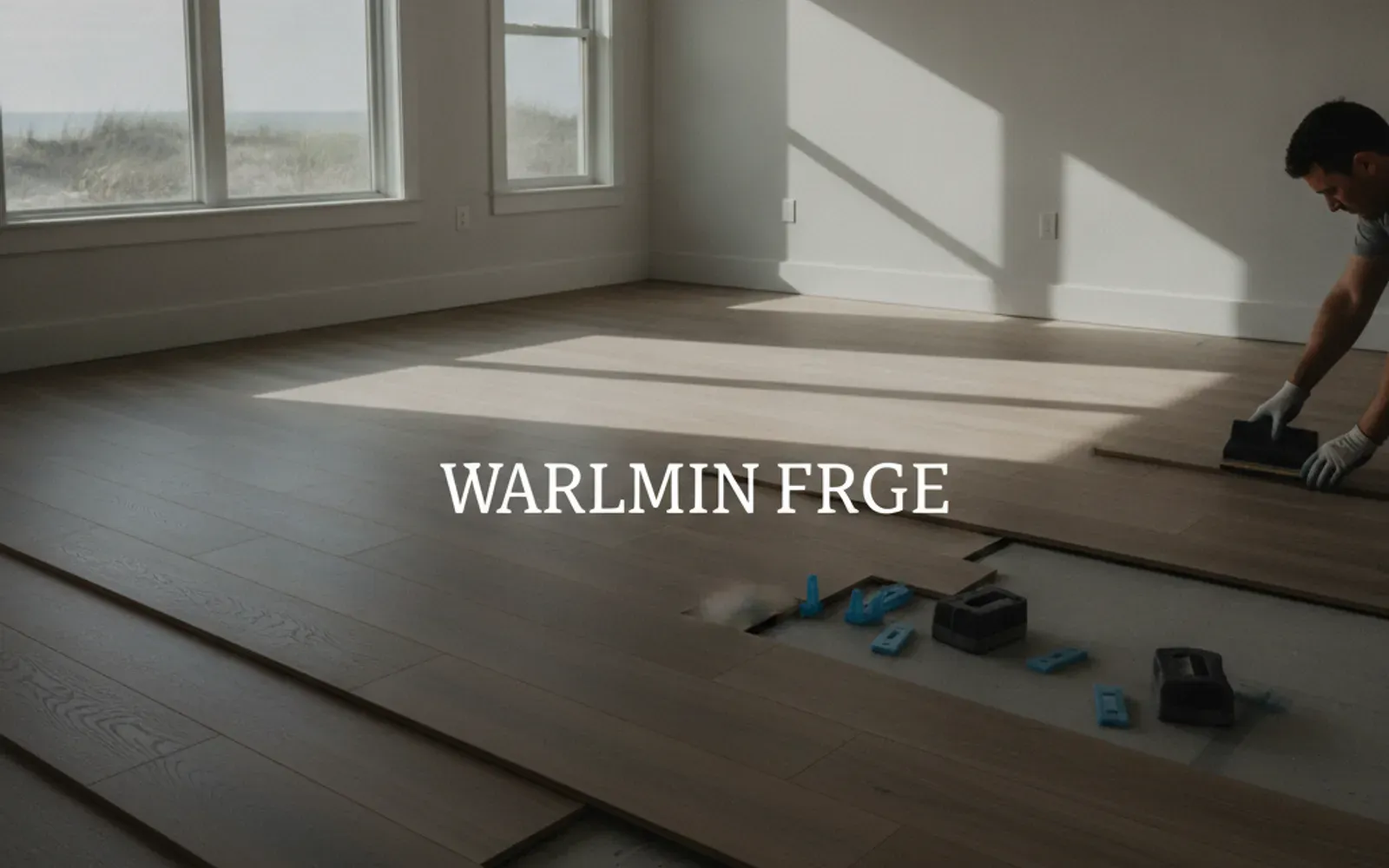
Flooring installation in Wilmington, NC involves a set of decisions that are different from what guides written for the Midwest or the Northeast will tell you. The coastal climate — humid summers, salt air within a few miles of the ocean, occasional flooding risk in low-lying areas — puts real pressure on flooring choices and on the installation technique itself. Yurii Statkevych has been installing and removing flooring in Wilmington homes for 15 years, working as a hands-on owner who shows up personally for every job.
What Flooring Installation and Removal Really Includes
Flooring is not just laying planks on a flat surface. The process starts well before the first board goes down and finishes with details most homeowners do not think about until they are missing.
Subfloor Assessment and Preparation
The subfloor is the foundation of any new floor, and it is the variable that most often determines whether an installation lasts five years or fifteen. Before any new material goes down, Yurii inspects the existing subfloor for soft spots, high spots, squeaks, and moisture damage. Plywood subfloor that is delaminating or OSB that has swelled from moisture contact needs to be addressed — not covered over. Low spots more than 3/16 of an inch over six feet need to be leveled with floor patching compound before floating floors will lie flat.
Laminate Flooring Installation
Laminate is an engineered wood product with a photographic wear layer — it looks like hardwood but is not solid wood. It is a click-together floating floor, meaning planks snap together and are not fastened to the subfloor. Laminate is a cost-effective choice for bedrooms and living areas where moisture is not a significant concern. In Wilmington’s climate, laminate should be used cautiously in ground-floor rooms with any history of moisture infiltration. Proper underlayment — typically foam or cork — is installed beneath laminate for sound deadening and slight moisture buffering.
Luxury Vinyl Plank (LVP) and Vinyl Tile Installation
LVP has become the dominant residential flooring choice in coastal markets like Wilmington for good reason. It is 100 percent waterproof at the plank level, dimensionally stable in humidity swings, and available in realistic wood and stone looks. It handles the kind of humidity spikes that happen in a Wilmington summer — when you run the air conditioning hard and then open windows for a few days — without buckling or gapping. LVP is appropriate for bathrooms, kitchens, laundry rooms, and any below-grade or ground-floor space. Installation technique matters: expansion gaps at walls, staggered seams, and proper underlayment (some LVP has it attached; some requires a separate layer) all affect how the floor performs over time.
Luxury vinyl tile (LVT) follows the same rules and is popular for bathrooms and laundry rooms where a tile look is preferred.
Ceramic and Porcelain Tile Installation
Tile flooring requires a fundamentally different installation method — thinset mortar, grout, and in many cases a cement board underlayment over the subfloor. Tile is the hardest, most waterproof option available for kitchens, bathrooms, mudrooms, and entryways. The trade-off is that it is harder underfoot and cold in winter without radiant heat. Porcelain tile is denser and less porous than ceramic, making it the better choice for wet areas and high-traffic rooms. Yurii handles mortar mixing, tile layout planning (to avoid awkward slivers at doorways or walls), cutting at obstacles, and grouting. Grout sealing is recommended after cure to resist staining.
Tear-Out and Haul-Away
Old flooring removal is physical work that generates a significant amount of debris. Carpet and pad come up relatively quickly. Old vinyl and glued-down laminate are slower — glue residue may need scraping and leveling. Tile removal is the most labor-intensive removal type, particularly when tiles were set in a mortar bed rather than thinset. Yurii removes old flooring cleanly, taking care not to damage baseboards unnecessarily, and hauls away all debris so you are not left coordinating a separate disposal run.
Transition Strips and Thresholds
The junction between two different flooring surfaces — hallway carpet to wood floor, bathroom tile to bedroom LVP, flooring meeting a sliding door threshold — needs a proper transition strip. These are often an afterthought but matter both aesthetically and practically as a trip-hazard prevention measure. Yurii fits and installs transitions as part of every flooring project.
Common Flooring Problems in Wilmington Homes
Buckling and Gapping in Humidity Swings
Flooring that buckles (planks pushing upward) or gaps (planks pulling apart) after installation almost always traces to one of three causes: insufficient expansion gap at the walls, acclimation that was skipped or too short, or a moisture problem in the subfloor. Wood-based flooring products expand and contract with humidity changes — the expansion gap around the perimeter allows for this movement without buckling. In Wilmington, where indoor humidity can swing 20 to 30 percentage points between winter and summer, this is not a theoretical concern.
Squeaky Subfloors
Squeaks in existing flooring — or under new flooring shortly after installation — come from movement between the subfloor and joists, or between subfloor panels where edges have separated. Yurii addresses squeaks before new flooring goes down by screwing the subfloor down to the joists at the problem locations. Covering a squeak with a new floor only muffles it temporarily.
Water-Damaged Subfloor
Ground-floor slabs and crawl-space-supported subfloors in the Wilmington area see more moisture exposure than most. Before installing new flooring over a subfloor that has been wet, the moisture source needs to be addressed and the subfloor needs to dry to acceptable levels. Yurii checks for moisture issues during the estimate walk-through and will recommend against covering subfloor that has not dried adequately.
Choosing the Right Flooring for Your Wilmington Home
The right flooring choice depends on the room, the level of foot traffic, moisture exposure, and budget. Here is a practical framework:
- Bathrooms and laundry rooms: Tile or LVP. Both are waterproof. Tile is more traditional; LVP installs faster and is warmer underfoot.
- Kitchens: LVP or tile. LVP handles spills easily and is more forgiving underfoot during long cooking sessions.
- Living rooms and dining rooms: LVP, laminate, or tile depending on moisture history of the space. LVP is the safe choice in any first-floor space.
- Bedrooms: Laminate or LVP. Bedrooms have the lowest moisture exposure, so laminate works well and is cost-effective.
- Entryways and mudrooms: Tile or LVP — both handle sand, wet shoes, and tracked-in debris well.
Yurii does not sell flooring but can advise on what works for your specific situation. He installs material you supply or can direct you to local suppliers he trusts.
What Affects Flooring Installation Cost in Wilmington
Several factors determine the total cost of a flooring project:
- Square footage: The primary cost driver for both labor and materials.
- Material type: LVP and laminate are typically less expensive to install than tile, which requires mortar, grout, and more preparation time.
- Subfloor condition: A subfloor that needs leveling, patching, or partial replacement adds cost and time but is necessary for a lasting result.
- Removal of existing flooring: Carpet removal is faster; glued-down vinyl or tile removal takes longer and adds to labor.
- Room complexity: Many small rooms, lots of cuts around obstacles (toilets, cabinets, door frames), or unusual room shapes add installation time.
- Transition strips and thresholds: Multiple room connections require multiple transitions.
Get a free estimate and Yurii will measure the space, assess the subfloor, and give you a complete cost picture before any commitment.
The Wilmington and Coastal Area Difference
Flooring installation near the coast comes with considerations that inland guides skip over. Homes in Wrightsville Beach and Kure Beach may have ground floors that sit on slab or on pilings with limited air circulation beneath. Myrtle Grove and Monkey Junction homes are often built on crawl spaces that can accumulate moisture seasonally. Porters Neck and Hampstead newer construction tends to have better vapor barriers but still benefits from LVP’s moisture resistance on ground floors. In every case, the subfloor prep and the material choice matter more than they would in a drier climate.
Homes in the Wilmington historic district often have original heart pine or wide-plank subfloors that need careful assessment before new flooring goes on top. The density of old-growth pine subfloor is actually a strength — it holds fasteners better than OSB — but it needs to be level and dry before floating floors will perform well.
Yurii serves all of these communities: Carolina Beach, Kure Beach, Leland, Ogden, Myrtle Grove, and beyond. Scheduling is straightforward and travel to nearby areas is not a problem.
Related Services
New flooring often comes with adjacent needs. If baseboards or quarter-round need to be removed and reinstalled around new flooring, see trim, molding, and baseboards. If the project is part of a broader renovation, see small remodeling. If the bathroom or kitchen is getting new flooring, caulking and weatherproofing at the tub surround or countertop edge is worth doing at the same time. And if cabinets are being added or replaced as part of the same project, cabinet installation can be coordinated to happen in the right sequence — cabinets first, then flooring up to them, then trim.
Frequently Asked Questions About Flooring in Wilmington, NC
How much does flooring installation cost in Wilmington, NC?
Flooring pricing varies based on square footage, material type, subfloor condition, and whether tear-out is needed. Because these factors interact and subfloor surprises are common, honest flat-rate quotes are not possible until the space is seen. Yurii provides free on-site estimates that account for everything — removal, prep, installation, and transitions — so there are no surprises on the invoice. Contact Yurii to schedule a walk-through.
How long does flooring installation take for a full room?
A single bedroom or living room with a straightforward subfloor typically takes one full day from tear-out to final transition. Open-plan spaces covering multiple rooms can take two days. Tile installation takes longer than LVP or laminate because of mortar set time between laying and grouting. Yurii will give you a realistic time estimate during the initial assessment.
Can flooring be installed over existing tile or vinyl?
Sometimes, but it depends on the product and the condition. LVP can sometimes be floated over existing hard surface floors if they are level and well-adhered. However, adding height can create problems at thresholds and doors, and hidden moisture under existing vinyl is a real concern in coastal homes. Yurii assesses whether installation over existing flooring makes sense for your specific situation or whether tear-out is the better path.
How long should LVP acclimate before installation?
Luxury vinyl plank should acclimate in the room where it will be installed — flat, in the boxes — for at least 24 to 48 hours before installation. This allows the planks to reach the ambient temperature and humidity of the space, reducing expansion and contraction after installation. Skipping acclimation is one of the shortcuts that leads to buckling complaints within the first few months. Yurii schedules delivery and acclimation time into the project plan.
What is the best flooring for a Wilmington beach house or vacation rental?
Durability and moisture resistance are the top priorities in a beach house or vacation rental. LVP is the near-universal recommendation — it handles wet feet, sandy floors, high-humidity summer months, and the neglect that sometimes comes with short-term rental occupancy. It is also straightforward to replace individual planks if a section is damaged, which is a practical advantage for rental properties. Tile is a strong second choice in main living and kitchen areas.
Can you install flooring under existing kitchen appliances?
Appliances like refrigerators and dishwashers should generally have flooring run beneath them for a clean finished look and to allow appliance replacement without visible gaps. A freestanding range typically sits on the flooring; a dishwasher may need to be temporarily removed to run flooring underneath. Yurii accounts for these situations during planning and coordinates appliance movement as part of the job where needed. See appliance installation if appliances also need to be reconnected after the project.
Do I need permits for flooring installation in Wilmington?
Residential flooring replacement — swapping one floor covering for another without structural changes — does not require a building permit in Wilmington or New Hanover County. If the project involves subfloor replacement that is part of a larger renovation requiring permits, Yurii will advise accordingly.
New floors change how a room feels every day you’re in it. Get a free estimate or contact Yurii to walk through your project.