
Appliance installation in Wilmington, NC sounds simple until the delivery crew drops the dishwasher in your kitchen and drives away. Most appliance retailers sell installation as an add-on, but what you get is often a rushed connection, no leveling, and a “tested” wash cycle that runs for thirty seconds before the technician calls it done. Yurii Statkevych takes a different approach — he is a working handyman who installs appliances the same way he does every other job in a home: with the care and precision that keeps homeowners calling him back for fifteen years.
Appliances Yurii Installs and What Each Job Involves
Dishwasher installation is one of the most technically involved common appliance jobs. A proper dishwasher install requires connecting a hot water supply line to the shutoff valve under the sink, routing the drain hose in a high-loop or through an air gap to prevent backflow, connecting the power supply (either to a dedicated outlet or through a junction box), sliding the unit into the cabinet opening without pinching the lines, leveling it front-to-back and side-to-side, and securing the mounting brackets to the underside of the countertop. Skip any one of those steps and you either get a dishwasher that does not drain correctly, one that slowly leaks onto your subfloor, or one that vibrates enough to rattle the cabinet faces loose. Yurii completes every step and runs a full wash cycle before confirming the job is done.
First-time dishwasher installation — replacing a cabinet where no dishwasher has been before — is also within scope provided an appropriate outlet and a hot water shutoff are accessible in the cabinet. If a new shutoff valve is needed, that is a minor plumbing task Yurii handles in the same visit.
Over-the-range microwave installation is one of the appliance jobs that most homeowners underestimate. These units weigh between forty and sixty pounds, mount from a wall plate and upper cabinet bolts simultaneously, and need to be held at precise height while the mounting hardware is secured. Yurii handles this solo using proper technique and support, without damaging the cabinets or the unit. He also connects the ventilation: whether your kitchen has an exterior duct that vents cooking exhaust out of the home or requires the microwave to be set to recirculate through its internal charcoal filter, Yurii configures it correctly so the fan actually works as intended.
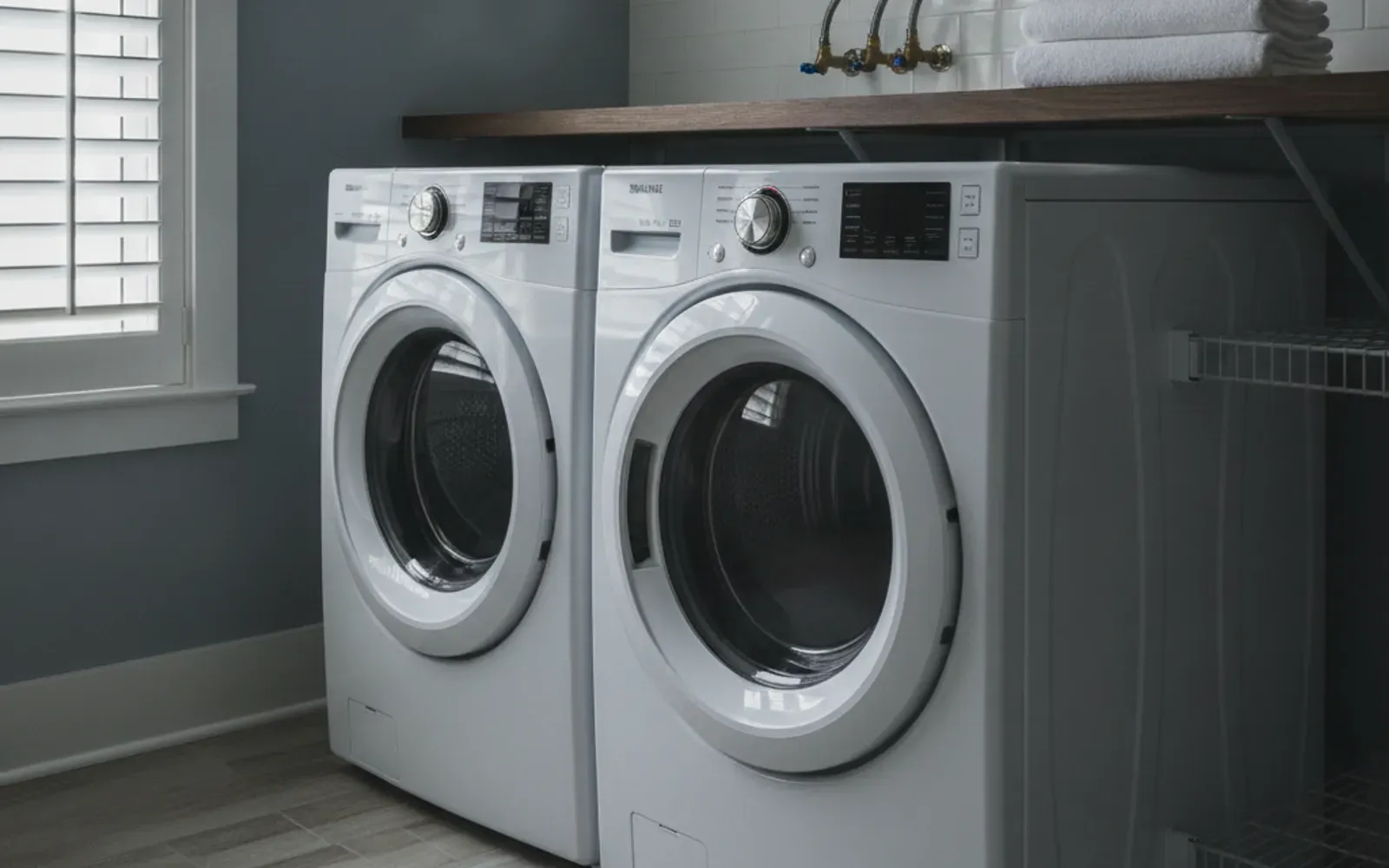
Washer connection and dryer hookup covers the mechanical and utility connections. For a washing machine, that means connecting hot and cold supply hoses to the wall valves, routing the drain hose into the standpipe or laundry tub, confirming the machine is level so it does not walk across the floor on the spin cycle, and ensuring the hoses have no kinks. For an electric dryer, Yurii connects the power cord (dryer power cords are sold separately from the appliance and must match the outlet configuration — three-prong or four-prong), secures the dryer vent hose to the wall exhaust port, and confirms airflow is clear. For gas dryers, Yurii positions the unit and handles all connections except the final gas line, which requires a licensed gas fitter.
Range hood installation and venting is a more involved project when the hood is a new addition rather than a direct swap. Replacing an existing range hood with a ducted model that connects to the same exterior vent is straightforward — Yurii removes the old hood, makes any needed bracket adjustments for the new model, connects the duct and power, and confirms the fan operates at all speeds. Swapping an existing over-the-range microwave for a dedicated range hood, or relocating ductwork, is assessed on a case-by-case basis during the estimate.
Appliance removal and disposal coordination is available as an add-on for most installs. Old dishwashers, microwaves, washing machines, and dryers can be disconnected and staged for pickup as part of the same visit.
What “Installed Correctly” Actually Means
Every appliance Yurii installs gets checked against a consistent set of standards before he leaves:
- All water connections are tightened, inspected, and confirmed dry under pressure.
- Drain connections are routed with the correct high-loop or air gap to prevent contamination.
- The appliance is level on all axes — front-to-back and side-to-side — and adjusted legs are locked in place.
- Electrical connections are secure and the appliance powers on and operates correctly through at least one full test cycle or function test.
- Mounting hardware (dishwasher brackets, microwave wall plate bolts) is confirmed secure.
- All packing materials, protective films, and cardboard are removed before Yurii leaves.
That last point sounds trivial. It is not — delivery crews regularly leave protective plastic film inside dishwasher interiors, inside microwave cavities, and wrapped around drum rollers inside dryers. Running an appliance with that material in place causes problems ranging from burning smells to genuine damage.
Wilmington-Area Homes: Conditions That Affect Appliance Installs
Wilmington’s coastal climate and diverse housing stock create a few conditions worth knowing before installation day.
Older homes in the historic neighborhoods — Sunset Park, College Road area homes from the 1970s and 1980s, and midtown bungalows — sometimes have laundry hookups and kitchen plumbing that were last updated decades ago. Three-prong dryer outlets are common in older homes; four-prong outlets are the current standard. Yurii flags these compatibility issues during the estimate rather than showing up on install day with the wrong cord configuration.
Newer construction in Leland, Hampstead, and Porters Neck is generally code-current and compatible with modern appliances, but cabinet openings for dishwashers are sometimes built tighter than standard depth, and over-the-range microwave mounting heights vary. Yurii takes measurements before arriving when dimensions are a potential issue.
Beach properties in Wrightsville Beach and Carolina Beach often have compact kitchens, low ceilings in utility areas, or unusual laundry closet configurations. Over-the-range microwave installations in galley kitchens with low upper cabinets require careful measurement to confirm the unit fits. Yurii confirms specifications during the estimate.
Humidity considerations affect appliance installations in less obvious ways. Dryer vent connections on exterior walls should be properly sealed to prevent humid outdoor air from entering when the dryer is off — Wrightsville Beach homes within a few blocks of the ocean are particularly susceptible to backdraft through unsealed vent covers. Yurii checks and seals the vent cover connection as part of a dryer installation.
DIY Appliance Installation: Where It Goes Wrong
Home improvement retailers encourage DIY appliance installation, and for some tasks — connecting a washing machine with straightforward hose connections — the risk is relatively low. Where homeowners consistently run into trouble:
- Dishwasher drain hose routing without a proper high-loop allows contaminated water to back-siphon into the clean water supply.
- Over-the-range microwave mounting without proper cabinet-top support can result in the unit shifting or the upper cabinet facing pulling away from the frame over time.
- Dryer power cord configuration mismatched to the outlet type creates a safety hazard that is not always immediately obvious.
- Leveling skipped or done by feel rather than with a level results in dishwashers that pool water, washing machines that vibrate excessively, and range hoods that do not sit flush.
Yurii does this work every week. The common failure points are the first things he checks.
What Affects the Cost of Appliance Installation in Wilmington
Yurii provides free estimates before any work begins. The main factors that affect the scope:
- Type of appliance. Dishwasher installs take longer than washing machine hookups due to the combined plumbing, drain, and electrical work involved. Over-the-range microwaves take more time than under-counter installations.
- Existing hookup condition. Old or corroded shutoff valves, non-standard outlet configurations, or unusual duct routing add time and may require additional parts.
- New install vs. direct replacement. Replacing an identical appliance in a functioning hookup is faster than a first-time installation in a previously unused space.
- Old appliance removal. Disconnecting and staging the old unit adds time, especially if it requires emptying a dishwasher drain or disconnecting corroded supply fittings.
Related Services
Appliance installations frequently connect to other handyman tasks in the same visit or the same week. Light plumbing work covers the shut-off valve and supply line side of dishwasher and washing machine installations. Light electrical work addresses outlet and circuit questions that come up during a dishwasher or microwave install. Cabinet installation is relevant when an appliance swap reveals damaged cabinet interiors. Small remodeling is the right next step when a kitchen update involves both new appliances and other changes. General home repairs covers the broader list of items that tend to accumulate.
Yurii serves homeowners across the Wilmington metro area, including Wrightsville Beach, Leland, Hampstead, Monkey Junction, and Castle Hayne.
Frequently Asked Questions About Appliance Installation in Wilmington
How long does a dishwasher installation typically take?
A straightforward dishwasher replacement — swapping out an existing unit in a functional hookup — typically takes ninety minutes to two hours, including disconnecting the old unit, making any needed supply or drain adjustments, installing the new unit, leveling it, and running a test cycle. A first-time dishwasher installation in a cabinet that previously had no dishwasher takes longer depending on whether a shutoff valve and outlet are already in place.
My new dishwasher does not come with a power cord — is that normal?
Yes, and it catches many homeowners off guard. Most dishwashers are designed to be hardwired through a junction box rather than plugged into an outlet. Some come with an optional power cord kit sold separately. Yurii confirms the power connection method during the estimate and handles whichever configuration your installation requires.
Can you install a washing machine in a tight laundry closet?
Yes, though tight closet installations require confirming that door clearance, exhaust ventilation (for dryers), and drain standpipe height are all correct before the unit is moved into position. For stacked washer-dryer configurations, Yurii handles the stacking kit installation and confirms the combined height fits the closet ceiling. Bring Yurii the appliance model number during the estimate so he can verify dimensions in advance.
Do you remove the old appliance as part of the installation?
Appliance removal can be included in the same visit. Yurii disconnects the old unit, drains it as needed, and stages it for curbside pickup or hauls it away if you have arranged disposal. Let him know during the estimate so the job is quoted correctly.
My range hood does not vent to the outside — can you convert it to ducted venting?
This depends on whether an exterior vent path is accessible — typically through an exterior wall or the ceiling into the attic and out through a roof cap. Yurii assesses the layout during an estimate. If a clear duct path exists, he can run ductwork and install the appropriate exterior vent cap as part of the range hood installation. If no duct path is practical, a recirculating configuration with charcoal filters is the alternative.
What is the difference between a three-prong and four-prong dryer outlet, and does it matter?
It matters. Older homes typically have three-prong 240V outlets; current electrical code requires four-prong outlets that include a separate ground wire. Most new dryers ship with no power cord — you buy the cord separately to match your outlet. Using a three-prong cord on a modern dryer with a four-prong receptacle (or vice versa) is a safety issue. Yurii confirms your outlet configuration during the estimate and arrives with the correct cord.
Can you install a dishwasher if there is no air gap on the sink?
Yes. North Carolina plumbing code allows a high-loop drain configuration — routing the drain hose up to the highest point under the sink before connecting to the garbage disposal or drain — as an alternative to a separate air gap fitting. Yurii uses this method as standard practice where no air gap is present.
Getting a new appliance running right the first time saves the hassle of callbacks and prevents water damage from connections that were rushed. Get a free estimate or contact Yurii to schedule your appliance installation anywhere in the Wilmington, NC area.