Light plumbing work in Wilmington, NC is among the most consistently requested handyman services in the region — and with good reason. Coastal humidity, hard water minerals carried in from the Cape Fear River basin, and the general wear of daily use combine to put real stress on the fixtures and fittings that keep a household running. A dripping kitchen faucet wastes hundreds of gallons of water per month. A running toilet can add sixty or seventy dollars to a water bill before most homeowners notice it. And a garbage disposal that grinds to a halt mid-meal is the kind of disruption nobody schedules. Yurii Statkevych handles these repairs and replacements quickly, cleanly, and with fifteen years of experience working in homes across the greater Wilmington area.
What Handyman-Level Plumbing Covers
Minor plumbing work — sometimes called handyman plumbing or non-licensed plumbing — refers to fixture-level repairs and replacements that do not require moving pipes inside walls, re-piping supply or drain lines, or touching water heater systems. In North Carolina, these tasks do not require a plumbing permit or a licensed plumber. The scope is broader than most homeowners expect.
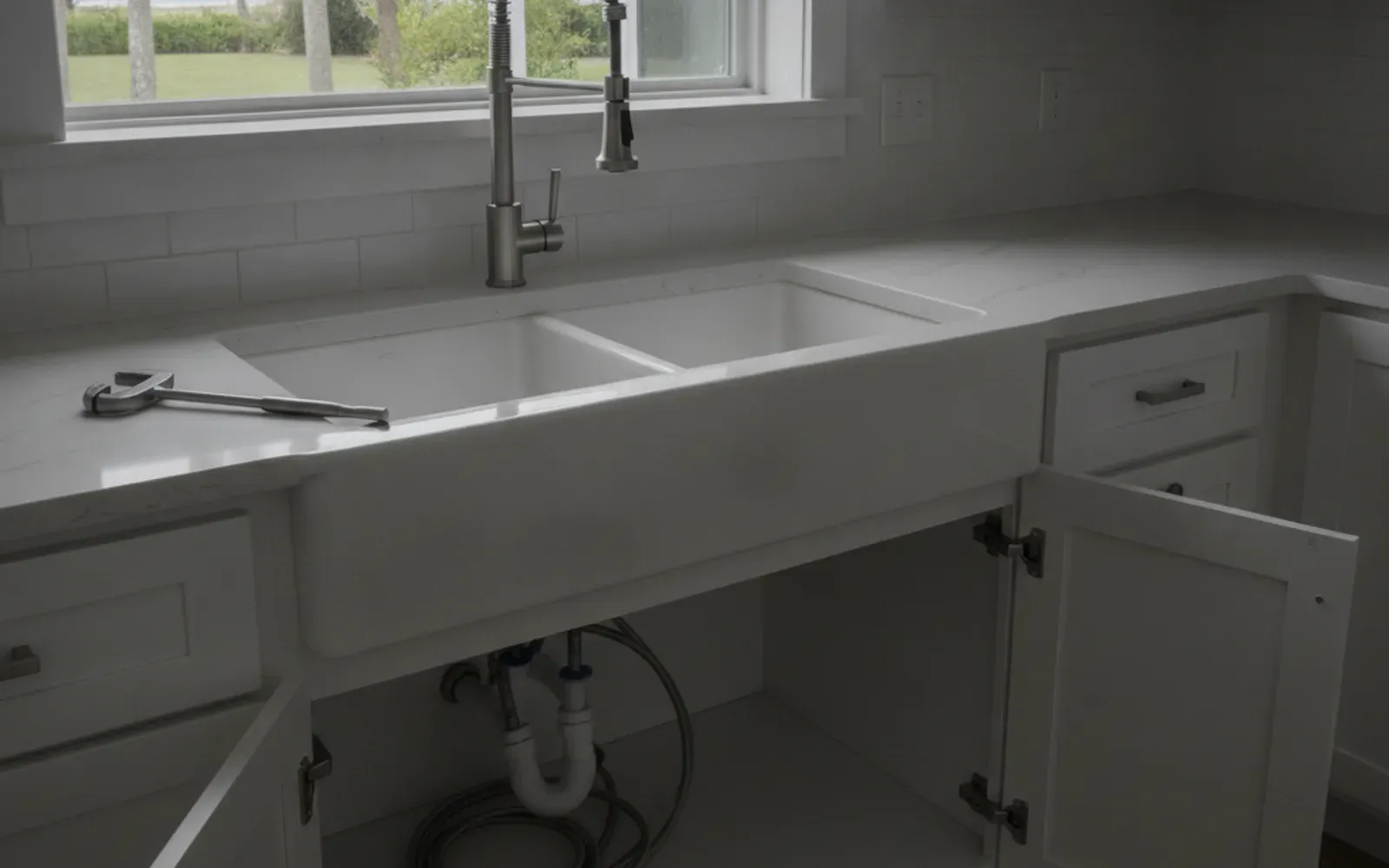
Kitchen faucet replacement and repair is one of the most common jobs. Whether you have purchased a new single-handle pull-down faucet for a kitchen refresh or your existing faucet has developed a slow drip from the spout or handle base, Yurii handles the job completely: shutting off the water supply, disconnecting and removing the old faucet, cleaning the sink deck, setting the new faucet with proper sealing, and connecting both hot and cold supply lines before doing a full leak check.
Bathroom faucet replacement follows the same process. Single-hole and widespread three-hole configurations are both standard work. Yurii also handles pop-up drain assembly replacement in bathroom sinks, which often needs attention when a faucet is being swapped out anyway.
Toilet repairs and parts replacement cover the full range of internal tank components: fill valves, flappers, flush valves, float assemblies, and handles. A running toilet is almost always a worn flapper or a misadjusted float — both are quick fixes. Toilet seats are easily replaced. When a toilet rocks slightly on the floor, Yurii checks the wax ring and flange condition, as a rocking toilet can eventually damage the seal. Full toilet replacement (swapping one toilet for another) is also within scope as long as the existing flange is in good condition.
Garbage disposal installation and replacement is one of the most satisfying one-visit fixes. Disposals have a finite lifespan — typically eight to twelve years — and when they seize, jam continuously, or start leaking from the bottom, replacement is almost always the right call over repair. Yurii removes the old unit, prepares the sink flange connection, mounts and wires the new disposal to the existing switched outlet under the sink, and connects the drain to the dishwasher and P-trap. He runs the unit through a full test cycle before the job is done.
Shut-off valve replacement under kitchen and bathroom sinks and behind toilets is critical preventive maintenance that most homeowners overlook until a valve fails — which tends to happen at the worst possible moment. Old compression-style valves develop drips, seize when turned, or simply fail after years of corrosion. Replacing them with quarter-turn ball valves is a significant upgrade in reliability. It is also one of the smartest proactive investments a Wilmington homeowner can make, given the region’s humidity.
P-trap and drain assembly replacement is straightforward when the work is under a sink or visible in a vanity cabinet. Plastic P-traps crack and develop slow drips; chrome traps corrode. Replacement is typically a short job and dramatically cheaper than letting a slow cabinet leak damage the interior.
Supply line replacement from shut-off valves to faucets and toilets is another maintenance item worth scheduling proactively. Braided stainless steel lines are significantly more durable than older plastic or chrome-plated lines, and Yurii replaces them as a standard step whenever he is replacing a faucet or valve.
What Falls Outside This Scope — and Why It Matters
Yurii is straightforward about the line between handyman plumbing and licensed plumbing work. Re-piping a home, moving supply or drain lines inside walls or floors, water heater installation or repair, and sewer line work all require a licensed plumber and a permit in North Carolina. If your project involves any of those elements, Yurii will tell you honestly during the estimate and refer you to a licensed plumber he trusts in the Wilmington area. No guessing, no halfway measures.
Common Scenarios Around Wilmington
Different neighborhoods and property types bring different plumbing situations:
- Older homes in Midtown and the Historic District often have original shut-off valves that have not been turned in decades and chrome supply lines that are long past their useful life. A preventive visit to replace valves and supply lines throughout the house is a practical investment before those fittings fail.
- Vacation rentals in Carolina Beach and Kure Beach take more abuse than primary residences. Toilet parts wear faster, disposal seals fail sooner, and faucet cartridges need replacement more often. Pre-season plumbing checkups save rental owners from the kinds of guest calls nobody wants.
- New construction in Leland and Hampstead sometimes comes with builder-grade faucets and fixtures that homeowners want to upgrade immediately. Swapping in higher-quality faucets and adding soft-close toilet seats are popular early upgrades Yurii handles in a single visit.
- Older condos in the Monkey Junction and Myrtle Grove corridors frequently have supply lines and shut-off valves that were installed during the original build and have never been touched. Those are the fittings most likely to fail.
Signs You Should Call Sooner Rather Than Later
Slow drips and minor leaks have a way of becoming expensive cabinet repairs or subfloor replacements. Watch for: water stains under sink cabinet bases, faucet handles that have become loose or difficult to turn, toilets that run intermittently or refill without being flushed, or any visible mineral buildup (white crust) around supply line connections. Any of those signals is a reason to schedule a handyman plumbing visit before a small job becomes a large one.
DIY vs. Calling a Pro
Toilet flappers and basic faucet cartridges are genuinely DIY-friendly repairs for a homeowner comfortable shutting off the water supply and following instructions. Where things go sideways: corroded supply line connections that snap off when disturbed, shut-off valves that will not close fully and require the main to be shut off, or garbage disposal installations where the drain connection to the P-trap is slightly off and drips into the cabinet for weeks before anyone notices. Yurii’s advantage is not just knowing the steps — it is knowing which parts to inspect, which connections to double-check, and which signs during a repair indicate a bigger issue that should be addressed before the cabinet is closed back up.
What Affects the Cost of a Minor Plumbing Visit
Yurii provides free estimates before any work begins. The factors that shape the scope and time of a plumbing visit include:
- Parts supplied vs. already purchased. If you have already bought the faucet, disposal, or toilet you want installed, the job is a straightforward installation. If parts are needed, Yurii picks them up — hardware cost is separate from labor.
- Condition of existing connections. Corroded shut-off valves and old compression fittings can slow down a job if they require extra attention or the right tools to remove without damaging the supply line.
- Access and cabinet depth. Working under a pedestal sink with no cabinet is more time-intensive than a standard vanity cabinet with clear access.
- Number of tasks in one visit. Bundling several small jobs — replacing multiple faucets, a toilet, and several supply lines — into one visit is always more efficient.
How Yurii Works on Plumbing Jobs
Every plumbing visit starts with a look at what is actually there before any work begins. Yurii checks shut-off valve function, supply line condition, and drain connection quality before committing to an approach — particularly in older Wilmington homes where the existing fitting condition can surprise even experienced tradespeople. He arrives with common repair parts and a selection of braided supply lines on hand, so straightforward jobs are completed in a single visit without a parts run.
After every plumbing task, Yurii does a proper leak check: water pressure restored, connections inspected, drain tested with water flowing. He does not pack up until everything is confirmed dry and functional. The work area is wiped down before he leaves.
Related Services
Minor plumbing work often connects naturally to other handyman projects. Appliance installation frequently involves dishwasher supply line and drain connections — tasks that overlap directly with plumbing scope. Caulking and weatherproofing addresses the caulk lines around tubs, sinks, and showers that fail alongside aging fixtures. General home repairs cover the broader list of items that accumulate around a house. When cabinet interiors have been damaged by a slow leak, cabinet installation and small remodeling are natural follow-on projects.
Yurii serves homeowners across the Wilmington area, including Carolina Beach, Kure Beach, Leland, Ogden, and Castle Hayne.
Frequently Asked Questions About Minor Plumbing in Wilmington
How do I know if my faucet needs a cartridge replacement or a full faucet replacement?
Cartridge replacement makes sense when the faucet itself is in good condition — solid body, no corrosion at the base, and parts are available for the brand. When the faucet is more than ten to fifteen years old, shows significant mineral buildup or corrosion, or the brand is obscure enough that replacement cartridges are hard to source, a full faucet replacement is usually the smarter investment. Yurii assesses this during the estimate and gives you a straightforward recommendation.
Can you replace a toilet without replacing the flange?
In most cases, yes. A standard toilet-to-toilet replacement uses a new wax ring over the existing flange, and as long as the flange is at the correct height and not cracked or broken, no flange work is needed. If the flange is damaged or sitting below the finished floor level, Yurii will flag it before removing the old toilet so you know what you are dealing with.
Is a garbage disposal replacement a job I need to schedule ahead for parts?
Not usually. Yurii carries a selection of common disposal sizes (typically 1/2 HP and 3/4 HP InSinkErator models) and can often complete a replacement without a separate parts run. If you have already purchased the disposal you want installed, let him know during the estimate — he will confirm it fits the existing sink flange configuration.
My under-sink cabinet has water stains but I cannot find an active drip — what is causing it?
Intermittent drips are common and harder to find. The usual suspects are supply line connections that weep only under full water pressure, a P-trap slip-joint that is slightly loose, or a garbage disposal drain connection that seeps during heavy use. Yurii inspects all three during a visit and can usually identify the source quickly. Getting it resolved before the cabinet base boards are fully saturated prevents a minor repair from becoming a cabinet replacement.
How often should supply lines be replaced in a coastal Wilmington home?
Braided stainless supply lines are rated for roughly ten years under normal conditions. In Wilmington’s humid salt-air environment, especially for fixtures near exterior walls or in homes close to the ocean, inspecting them every seven to eight years is reasonable. Old plastic or chrome-plated lines should be replaced proactively regardless of age if they show any discoloration, mineral crust, or feel stiff when moved. Yurii replaces them as a standard step whenever he is already working on a faucet or valve.
Do you handle outdoor hose bib (spigot) replacement?
Yes. A hose bib that drips, has a damaged handle, or will not shut off fully is a standard handyman plumbing repair. Yurii replaces the bib or its washer and packing as appropriate. If the underlying pipe connection requires cutting into the wall, that moves into licensed plumber territory — but most hose bib replacements do not require that.
Can you install a new bathroom faucet if the sink has three holes but I bought a single-hole faucet?
Yes. Single-hole faucets typically come with a deck plate that covers the additional holes, so the installation works cleanly on a three-hole sink. If the holes need to be reconfigured or the sink deck requires modification, Yurii assesses that during the estimate.
A small plumbing problem handled quickly saves real money and real headaches. Get a free estimate or reach out to Yurii directly to schedule a visit anywhere in the Wilmington, NC area.