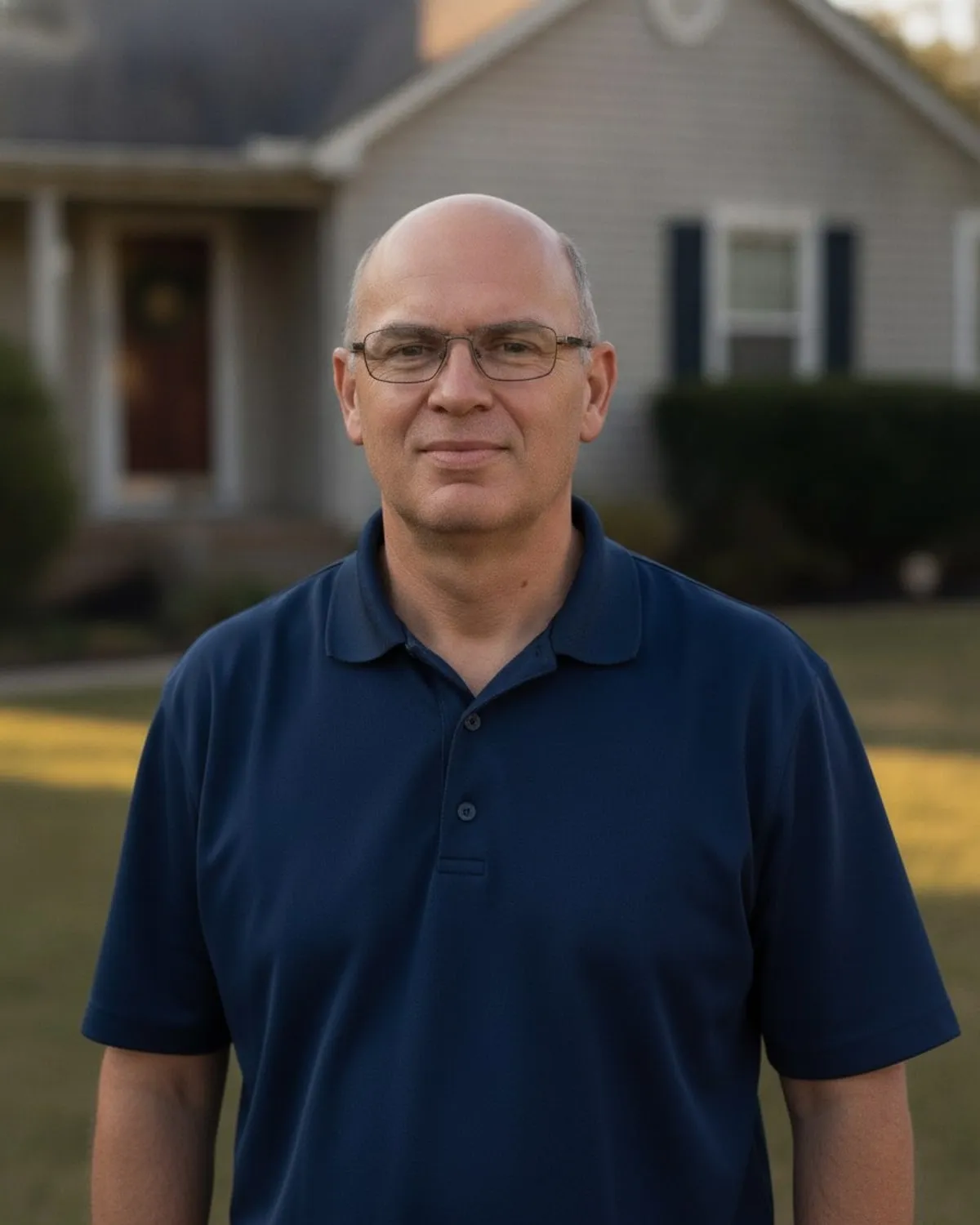
Shelf and picture hanging in Wilmington, NC is one of those jobs that looks completely straightforward until you are standing on a step stool with a level in one hand and a drill in the other, not entirely sure what is behind the drywall. Yurii Statkevych has been hanging shelves, mirrors, gallery walls, and curtain rods in Wilmington homes for 15 years, and the difference between his approach and a rushed DIY job shows up immediately — in how level things are, how firmly they stay in place, and in the absence of extra holes in your walls.
Everything that falls under shelf and picture hanging
This service covers a broader range of wall-mounted items than most homeowners think to ask about in a single visit.
Floating shelves are among the most-requested jobs. Whether it is a set of IKEA LACK shelves in a living room, a solid wood floating shelf above a desk, a built-in look with bracket-and-board shelving in a closet, or heavy-duty garage shelving, the principle is the same: find the studs, use hardware rated for the actual load, and hang level. The difference between a shelf anchored into studs and one held by plastic drywall anchors becomes apparent the first time it carries real weight.
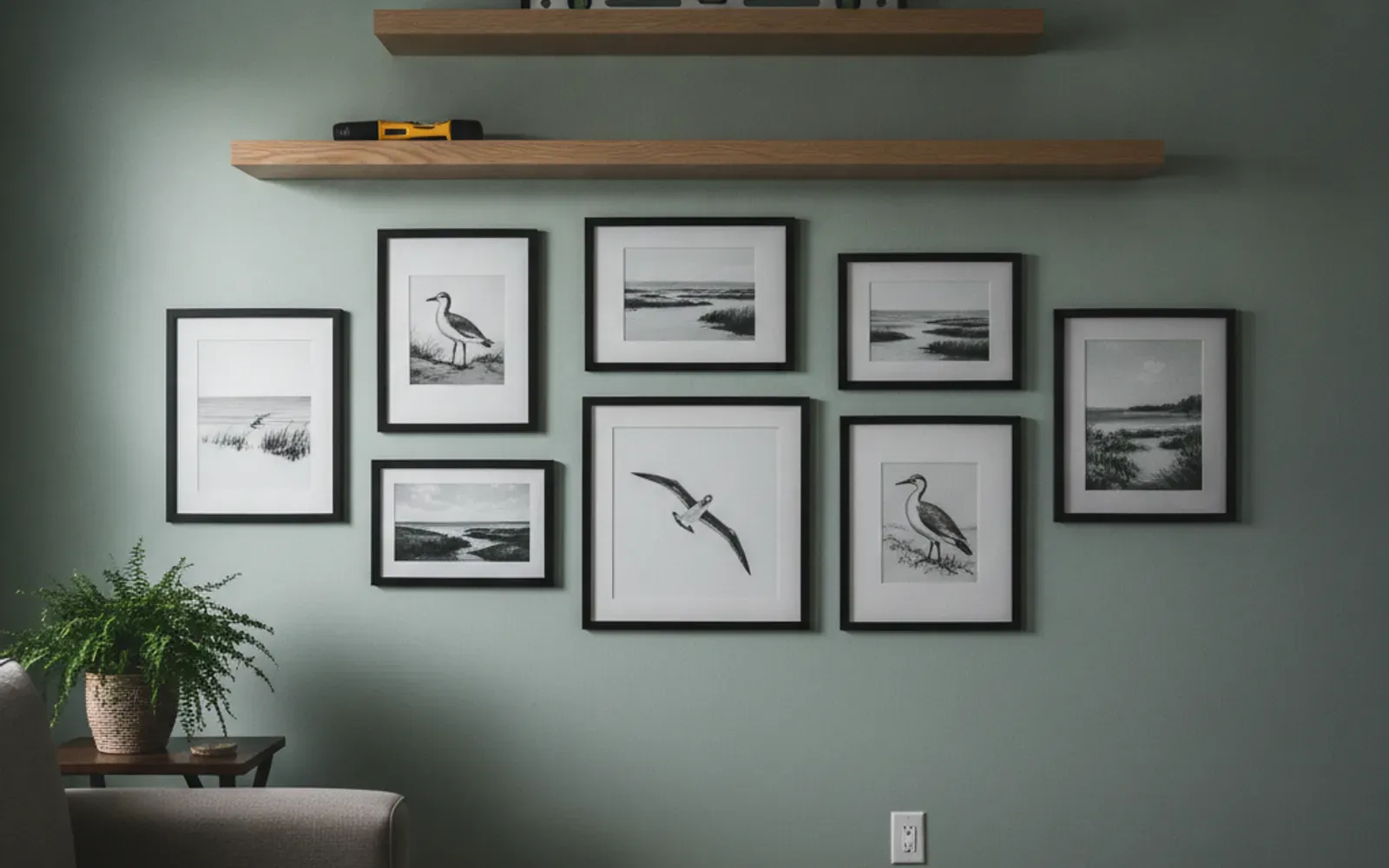
Gallery walls involve planning before a single nail goes in. Yurii can help you work through the arrangement on the floor first, spacing frames to create a layout that looks deliberate, then translate that arrangement to the wall with consistent gaps and a level baseline. A gallery wall done well is a feature; one hung without planning reads as clutter.
Large and heavy mirrors are a job that specifically benefits from professional help. A 50-pound mirror anchored with two picture hooks into hollow drywall is an accident waiting to happen. Yurii uses appropriate French cleat, Z-clip, or heavy-duty wall anchor systems rated for the actual weight, and confirms the mirror is secure before it is considered done.
Curtain rod installation requires choosing between stud mounting and anchor mounting depending on where the brackets fall relative to the window frame. Wide windows often have no stud behind the ideal bracket position — Yurii uses toggle-style anchors rated for the load in those cases, so the rod holds drapery panels without flexing or pulling free over time.
Window blind installation — inside mount, outside mount, and corded or cordless varieties — is a task that combines accurate measurement with careful bracket placement. Yurii handles blinds in individual rooms, whole-house blind installs in new construction, and blind replacement in vacation rentals.
TV wall mounting is closely related and available as its own dedicated service — see TV mounting for full details on bracket selection, cable management, and swivel arm options.
Types of walls and why it matters
Not all walls in Wilmington homes are drywall over wood studs, and the distinction changes the hardware approach entirely.
Standard drywall over wood studs — the most common configuration. Studs are 16 or 24 inches on center; stud-mounted hardware can handle significant weight. Yurii uses a stud finder and confirms with a test before committing to a location.
Plaster walls — found in older Wilmington homes, particularly those built before the 1960s. Plaster is harder to work with; nails and standard anchors behave differently, and cracking around holes is a risk with the wrong technique. Yurii is comfortable with plaster and adjusts his approach accordingly.
Concrete and masonry — exterior walls in some homes and certain condo buildings require hammer-drill bits and concrete anchors rather than wood screws. The process takes longer but the result is as solid as the wall itself.
Tile walls — hanging in bathrooms or kitchens over ceramic or porcelain tile requires diamond-tipped bits and a slower, more deliberate approach to avoid cracking the tile face. For items that need to be mounted on tile walls, this extra care is what prevents a costly repair.
Hanging projects where precision is non-negotiable
Heavy floating shelf installation
A floating shelf that is expected to hold books, plants, kitchen items, or audio equipment needs to be anchored into studs or into the blocking behind the drywall — not just into the drywall field. Yurii won’t let drywall anchors carry a load they were never rated for. When studs are not in the right location for the desired shelf position, he selects the correct toggle anchor for the actual weight rather than defaulting to whatever hardware came in the box.
Bathroom mirror and vanity mirror hanging
Bathroom mirrors are often heavy, often frameless, and frequently positioned where the stud layout doesn’t cooperate. Frameless mirrors use clips or adhesive-backed French cleats; framed mirrors need appropriate picture wire and hooks or a secure cleat. Either way, Yurii confirms the backing hardware is rated for the weight before the mirror leaves his hands.
Garage storage shelving
Garage shelving — wire, melamine, or plywood — gets loaded heavily and needs to anchor into wall studs or, where available, concrete masonry. Yurii installs freestanding and wall-mounted garage storage units with brackets that won’t pull loose under seasonal loading and unloading.
Before-listing and staging hanging
Homeowners preparing to list a Wilmington property often want artwork, mirrors, and shelving positioned to photograph well and show effectively. Yurii can hang staging items quickly and cleanly, and patch holes from previous hanging when display pieces are removed.
When DIY shelf hanging becomes the wrong call
Hanging a single lightweight picture frame is a straightforward DIY task. Things get more complicated when:
- The shelf or item is heavy enough that a failure would cause injury or damage
- You are not sure where the studs are, or a stud finder is giving inconsistent readings
- The wall is plaster, concrete, or tile rather than standard drywall
- You need multiple items hung at consistent height across a long wall
- The install involves an item that cannot be rehung (a mounted TV, a custom built-in shelf)
Missing a stud and patching the hole is no big deal with a small frame. Missing a stud under a 40-pound floating shelf and having it pull out of the wall three months later is a more significant problem — both the repair and the potential damage to whatever was on the shelf.
Yurii brings an accurate stud finder, the right drill bits for the wall type, appropriate anchors for the load, and a good level. The visit is typically fast. Get a free estimate and you will know what the job costs before anything goes on the wall.
What affects the cost of shelf and picture hanging in Wilmington
Number of items — A single floating shelf is a short visit; a full living room’s worth of gallery wall art and shelving is a longer one. Batching multiple hanging tasks into a single visit is more economical than separate calls.
Wall type — Standard drywall over studs is the fastest scenario. Plaster, concrete, and tile walls take more time and may require specialty bits or anchors.
Weight of the item — Lightweight art and standard blinds are quick. Heavy mirrors, loaded shelving, and pull-up bars require more care in anchor selection and confirmation.
Pre-planning required — A single shelf with a fixed location takes less time than a full gallery wall layout where placement needs to be worked out on-site.
Accessibility — Items hung at standard height are straightforward; vaulted ceilings or stairwell walls require a ladder and more care.
How Yurii works on hanging jobs
Owner-operated means Yurii is not sending a helper who needs to check in — he handles the assessment, the layout conversation, the anchoring, and the cleanup himself. He arrives with a well-calibrated stud finder, a quality level, and the hardware range to handle most wall types without a separate supply run.
Before drilling, he confirms stud locations with multiple readings and a test, marks carefully, and checks with you on the final placement. After hanging, he checks stability under load before stepping back. Drill dust and packaging are cleaned up before he leaves.
Shelf and picture hanging for Wilmington’s coastal homes
The humidity that defines life near the coast affects wall hanging in a few practical ways. Drywall in homes near Wrightsville Beach and Carolina Beach can have absorbed more moisture over the years than homes further inland, making it softer in some sections — another reason that stud-based anchoring is preferable to relying on hollow-wall anchors. Metal hardware on outdoor-adjacent walls, particularly in oceanside homes, benefits from stainless or zinc-coated fasteners that resist the salt-air corrosion that degrades standard hardware over time.
Older homes in Castle Hayne, Ogden, and midtown Wilmington frequently have plaster walls that require a different technique than the drywall that most hardware store anchors are designed for. Yurii adjusts his approach for plaster — scoring carefully, using the right bit speed, and choosing anchors that work with the plaster thickness.
Short-term rental properties in Myrtle Grove, Monkey Junction, and throughout the beach communities often need blinds, art, and shelving handled efficiently before a guest turnover. Yurii works with property managers and vacation rental owners on these tasks, treating the schedule with the same respect as a permanent-residence job.
Related services
Hanging and shelving often connects naturally to other work. If you are adding floating shelves to a wall that needs drywall repair from a previous project, combining the visits makes sense. Cabinet installation is related when the goal is storage rather than display. TV mounting is a closely related dedicated service for wall-mounted televisions. Small remodeling is the right category if hanging is part of a broader room refresh. Furniture assembly frequently pairs with shelving when IKEA or flat-pack units arrive at the same time.
Yurii serves homeowners throughout the Wilmington area, including Wilmington, Wrightsville Beach, Hampstead, and Leland.
Frequently asked questions about shelf and picture hanging
How much does shelf installation cost in Wilmington, NC?
The cost depends on the number of shelves, the wall type, the weight capacity required, and how much layout planning is involved. A single floating shelf on a standard drywall wall is a fast job; a multi-shelf display unit or heavy garage shelving with stud-mounted brackets takes longer. Yurii provides a free estimate based on what you actually need, so there are no surprises.
How do I know if my wall can support a heavy floating shelf?
The honest answer is: it depends on the wall construction and where the studs fall relative to where you want the shelf. A shelf anchored through drywall into two 2x4 studs can hold significant weight — typically well over 50 pounds per stud anchor point. A shelf anchored only into the drywall field using plastic inserts is much more limited. Yurii can assess your specific wall on-site and tell you exactly what the installation will support.
Can you hang items on a wall where previous holes were poorly patched?
Yes. If the previous owner or tenant left a wall with mismatched patches, Yurii can assess whether those areas are suitable for reuse, work around them, or incorporate a clean patch into the same visit before hanging. See drywall repair for patch work if that is the primary need.
How long does it take to hang a gallery wall?
A gallery wall of six to ten pieces, with layout planned on the floor first and then transferred to the wall, is typically a one-to-two hour job depending on the wall type and how much spacing adjustment is involved. Larger gallery arrangements with 15 or more pieces take proportionally longer. Yurii works through the layout with you before a single nail is placed, so the time is well spent.
Do you patch holes from items you remove before rehanging?
For a simple rehang — taking down old blinds and installing new ones, or repositioning art — Yurii can patch the existing holes before hanging in the new location. Significant patching is priced as part of the visit. See drywall repair for jobs where patching is the primary task.
Can you hang outdoor wall items like address plaques, house numbers, or exterior art?
Yes. Exterior mounting requires fasteners appropriate for the specific siding or masonry material and, in coastal Wilmington, hardware that resists salt-air corrosion. Yurii assesses the exterior wall material and uses the right approach for a secure, weather-resistant mount.
Is it worth hiring someone to hang a single picture?
If it is a large, heavy, or valuable piece — a substantial mirror, oversized canvas, or antique frame — having it hung correctly and securely is worth the cost of a short visit. Yurii often combines single-item requests with other small tasks at the same property to make the visit more economical. Mention anything else on your list when you contact Yurii and he can likely handle everything in one trip.